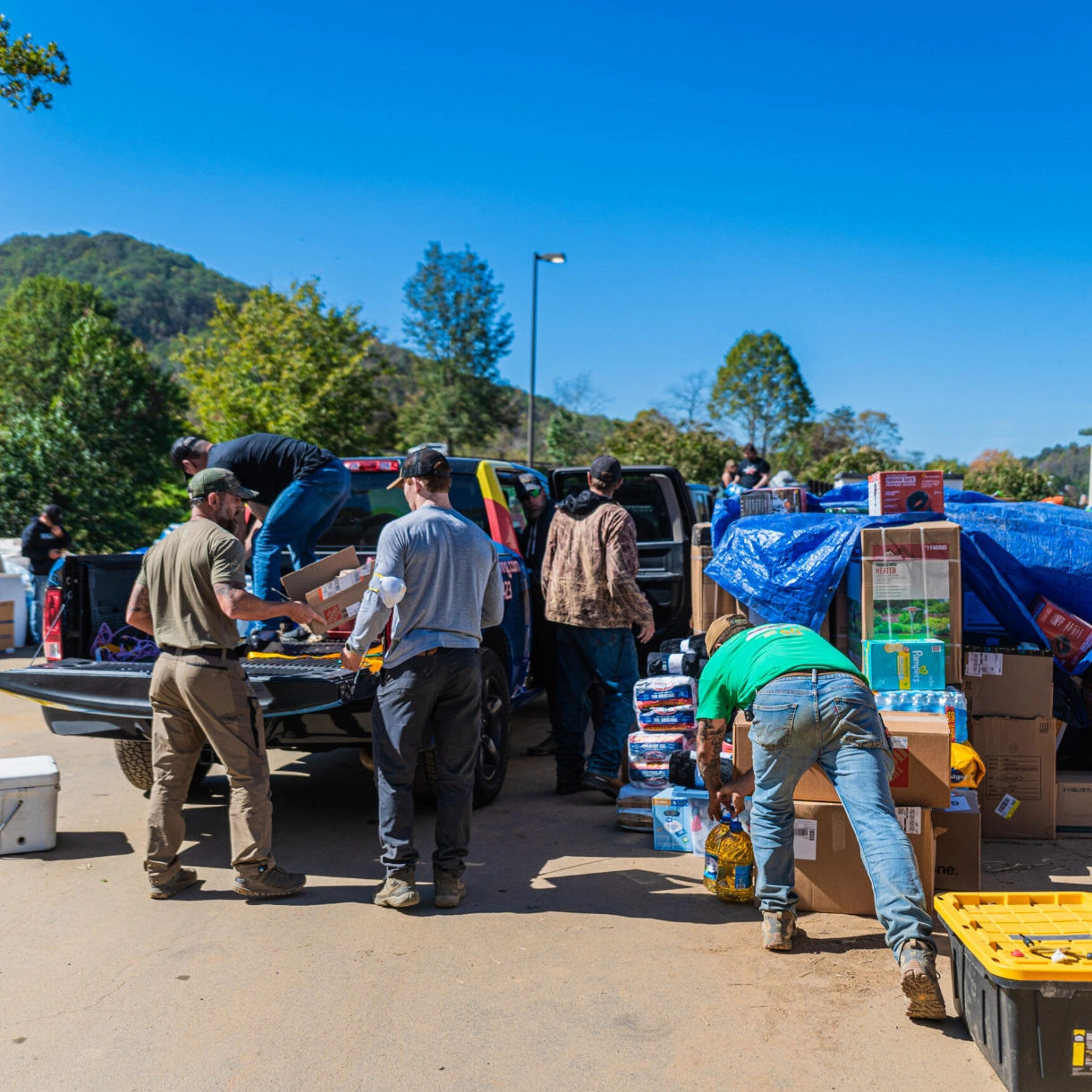
When cell towers are down, the power is out, the roads are blocked, and you do not know how to get help for yourself or your neighbor, where do you turn?
In moments like that, the earliest response begins locally.
Before regional systems are fully operational, neighbors help neighbors.
Doors open. Supplies are shared.
Businesses and churches become gathering points.
The strength is already there.
The challenge is coordination.
Nearby Nearby is building structure around what already happens — neighbors helping neighbors.
Conceptual mockup of how community hubs may appear during a disruption.
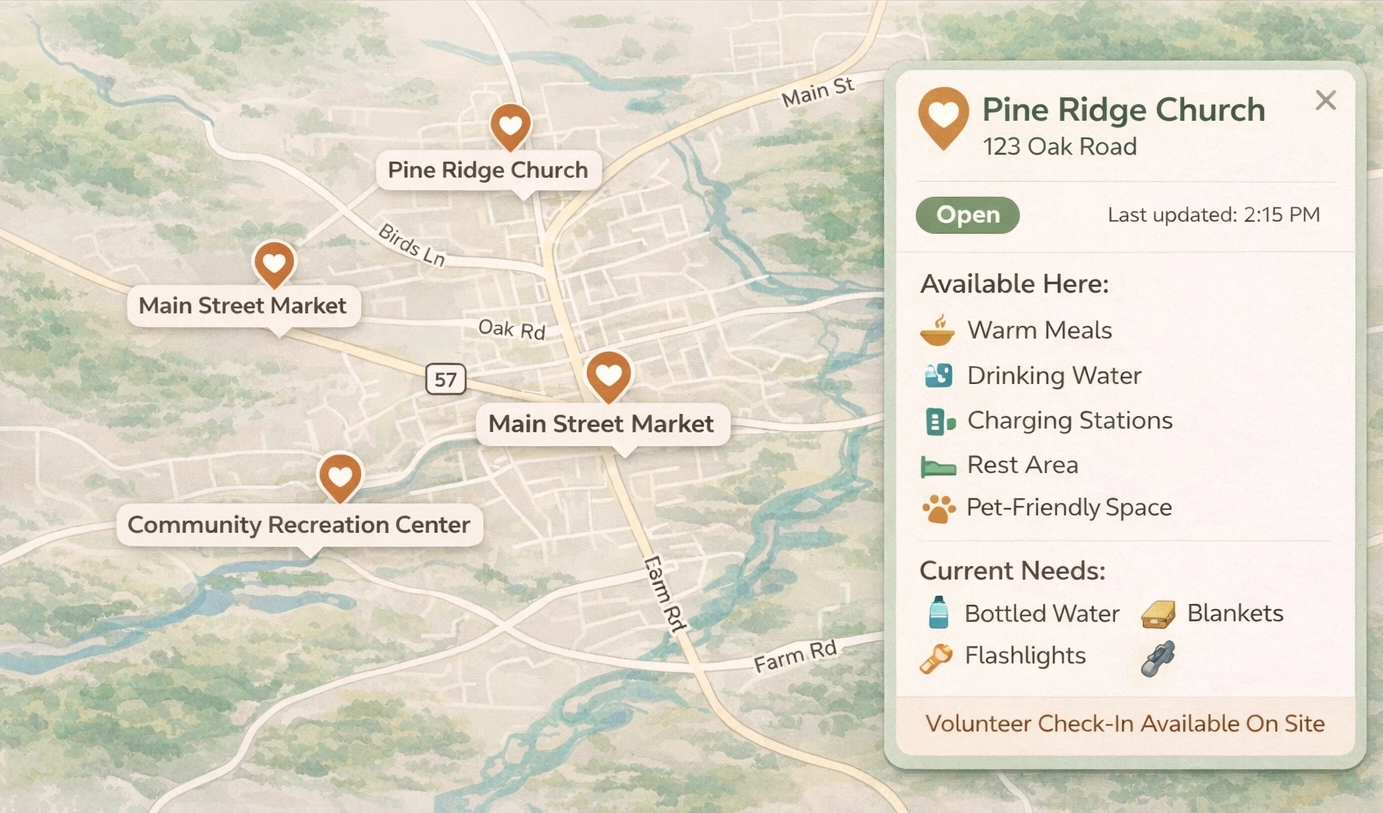
In a disruption, clarity matters.
Instead of scattered posts, text chains, and word of mouth, a structured map can show:
- Where people are gathering
- Which locations are operating
- Where supplies are being distributed
- What the community is asking for
- Where volunteers can go
This is not about replacing emergency response, It is about making local needs visible sooner, so outside support can understand where help is needed and respond more effectively.
It strengthens the space between impact and full system deployment.
Before, During, and After
Nearby Nearby is designed to support communities across the full cycle of disruption.
Before
Through the Nearby Nearby Network, the nonprofit organization working alongside the platform, grassroots community hubs are identified and strengthened before a disaster or disruption occurs.
These hubs are local trusted local places in the community.
By organizing them in advance and supporting them through structured visibility, communities are better prepared to respond and recover together.
During
The first 24 to 48 hours after disruption are often the most critical.
Power may be unstable. Cell networks may be unreliable. Information can fragment quickly.
During this window, trusted local gathering points and available resources become clearly visible so neighbors can stabilize quickly and outside responders can better understand local conditions.
The long-term goal is for designated community hubs to incorporate resilient communication capabilities, including satellite or alternative connectivity systems, so that local coordination can continue even when traditional networks are disrupted.
These hubs are intended to serve as visible stabilization points where:
- Local needs can be identified
- Available resources can be communicated
- Volunteers can organize
- Conditions on the ground can be shared
- Community members can gather, support one another, and reconnect
This approach strengthens early-stage community coordination in the critical early hours while official emergency response systems mobilize. It does not replace official emergency response systems or guarantee uninterrupted connectivity.
After
As power returns and roads reopen, recovery becomes visible.
Businesses reopening appear on the platform.
Fuel stations coming back online are marked.
Community services resume.
Recovery is not just physical. It is relational and economic.
When residents can see which businesses are open, they can support them sooner.
When volunteers, relief teams, and neighboring communities come in to help, they can quickly see where to eat, where to stay, where to buy supplies, and which services are operating.
That circulation matters.
Local businesses regain footing faster.
Communities stabilize sooner.
Recovery becomes visible, not uncertain.
Nearby Nearby provides structured visibility so that both residents and those coming to help can support the community in informed, coordinated ways.
Where We Are Today
We are currently developing, testing, and launching the first version of this system in Chatham County, North Carolina.
This is our starting point. The vision extends beyond one county.
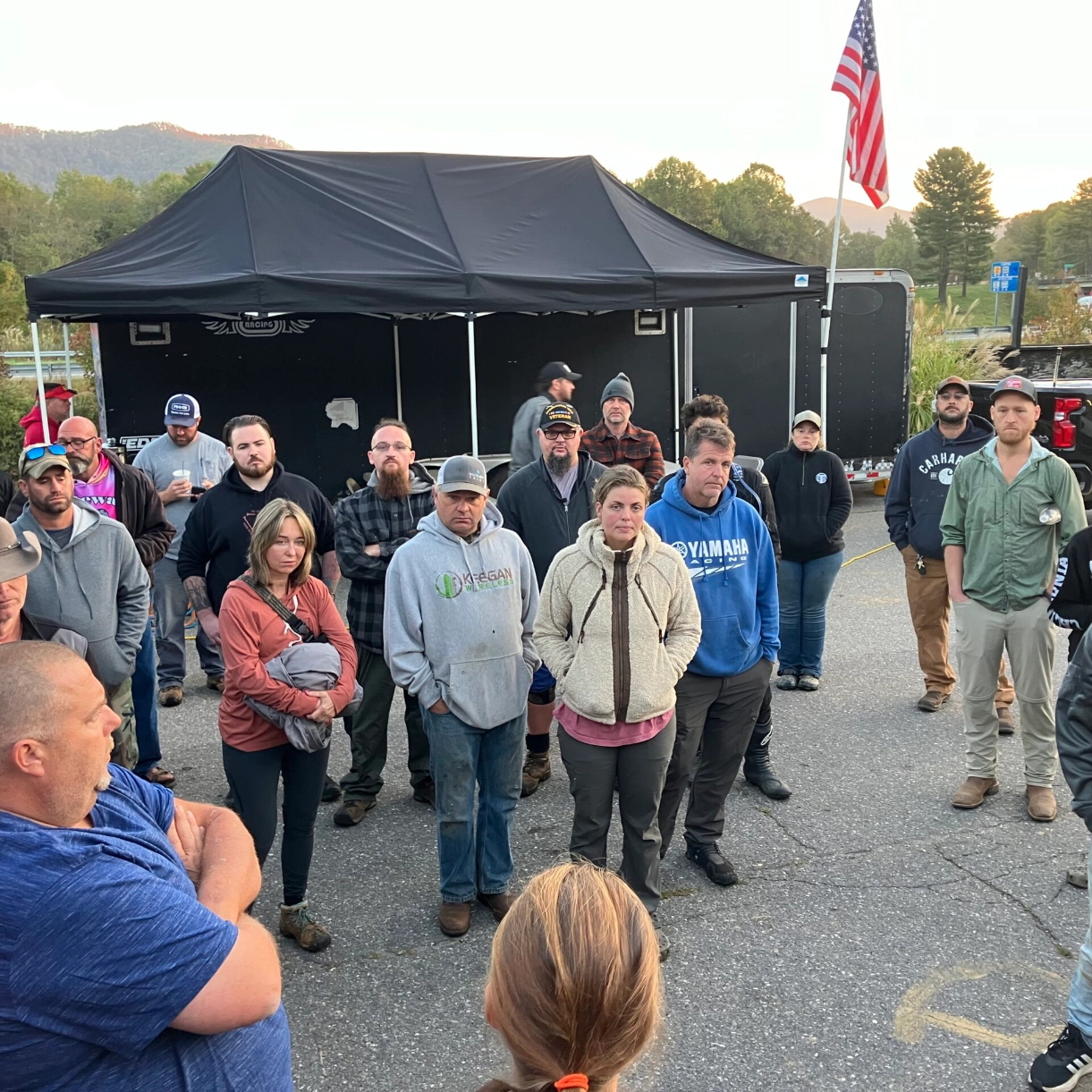
If you have experienced a disaster or disruption, whether as a resident, a volunteer, a local business owner, a faith leader, or someone who showed up to help, your perspective matters.
What did your community need most in those early hours?
What worked well on the ground?
What made coordination difficult?
What would have made stabilization easier?
This system is being built for communities and for the people who step up when it matters most.
What This Is Not
Nearby Nearby is not an emergency dispatch system.
- ✖ It does not replace 911.
- ✖ It does not direct first responders.
- ✖ It does not command operations.
- ✖ It does not issue official emergency instructions.
- ✖ It does not distribute funds or manage aid programs.
Emergency management professionals and public safety agencies lead response efforts. That role is essential.
We believe communities are strongest when information is clear and people can see where to go and how to help.
Our role is to support that clarity, not to replace the professionals who lead emergency response.
How Nearby Nearby and the Nearby Nearby Network Work Together
Nearby Nearby and the Nearby Nearby Network a North Carolina 501(c)(3) operate as distinct entities with aligned missions.
The Nearby Nearby platform provides structured visibility and coordination tools. The nonprofit focuses on identifying and strengthening grassroots hubs.
Roles are clearly defined to support community resilience while maintaining appropriate operational and governance boundaries.Learn More about Nearby Nearby Network